
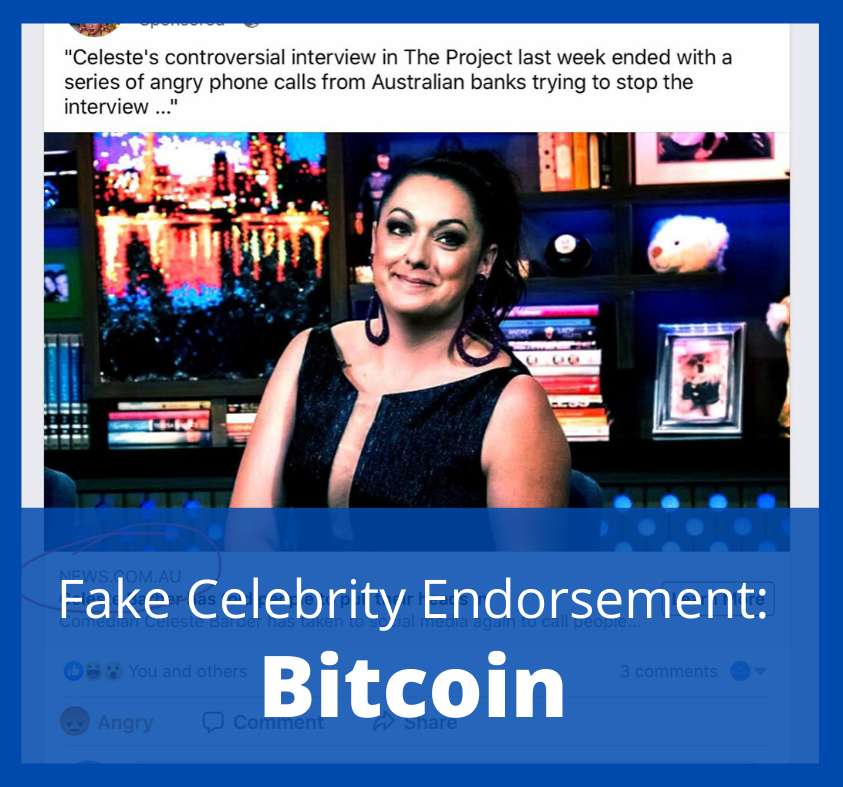
Idly scrolling through my Facebook feed today, I stumbled upon this post:
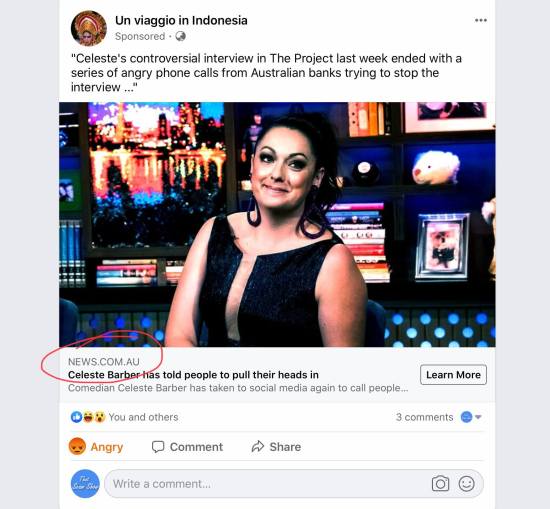
I was interested because Celeste Barber recently achieved the amazing feat of raising many millions of dollars to help Australians respond to devastating bushfires.
The news site’s excerpt is not surprising given that she used social media to achieve that feat. Looking at the poster’s caption: What could the banks be complaining about?
I clicked the link to take a look… but what I found is not at all related to what I’d expected to see:

The web page that opened was one of those fake stories about sudden riches from radical investment in Bitcoin – complete with the usual stolen photographs of other celebrities and legitimate television shows. And of course there are fake recommendations (falsely quoting Celeste) that everybody should go invest a ton of money in Bitcoin.
I don’t even have to do an ounce of research to know this is a scam.
Here’s why…
I have not investigated whether the investment is a scam because that’s irrelevant – the article is fake, pretending to be published by an established, reputable news agency, but it’s hosted by a completely different web domain. That alone should be enough evidence for anyone to not trust the content of the article.
- I’ve seen web pages exactly like this before. Celebrities whose photographs and fake quotes were misrepresented before include Rebel Wilson and members of the Australian Shark Tank show.
- The post appears to be a news report from news.com.au but it is not. Check out this screenshot, which shows the destination URL in the bottom left corner.
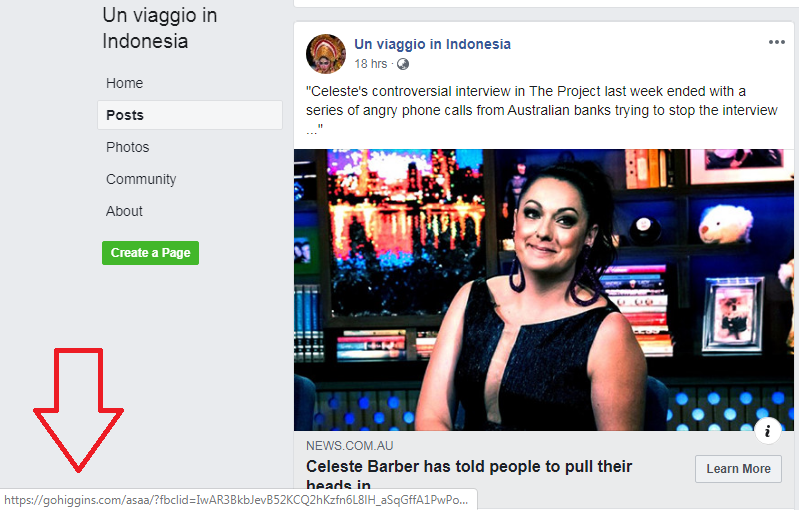
I was quick enough to get screen shots of the website redirection while the page was loading. It happened in two steps: Firstly to gohiggins:
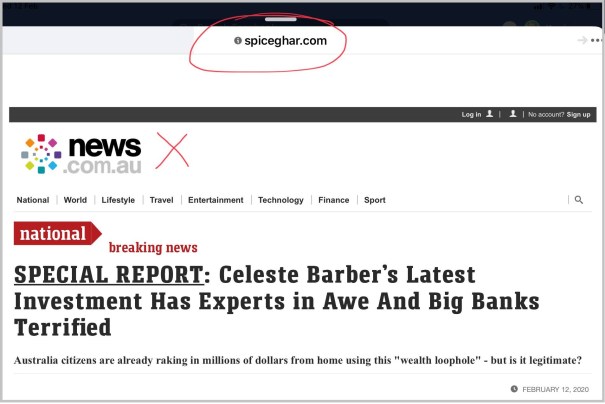
 And then it switched through to the fake article at:

You can see ‘spiceghar’ as the host at the top of the screen after it loaded on my tablet:
3. I’m not the only one who noticed that the post was not a real news.com.au article.
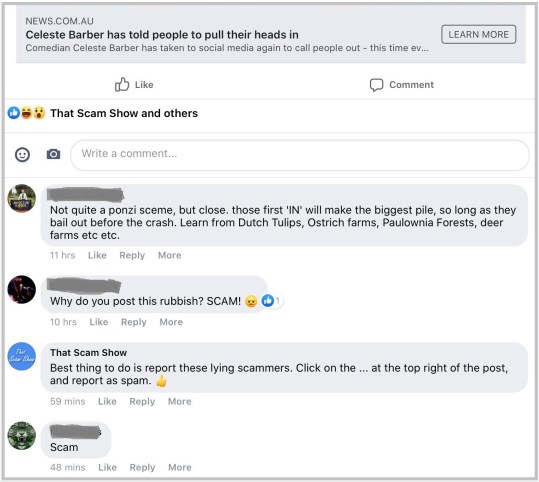
To clarify: The reason I suggested to report as ‘spam’ on Facebook is that there are limited options for calling out fraud. In all conscience, I would want to gather substantial evidence before reporting ‘fraud’ – but this post does meet the electronic media definition of spam because it is not what the reader should get when clicking a legitimate news article link, and it puts consumers at risk of financial losses.
The ‘spam’ option is available and it is suitable for this job.
In any case, there’s benefit in calling out fakery when you are confident it’s the right call. The more comments there are (from different people), the more likely that a warning will be noticed by someone who might otherwise have been duped.
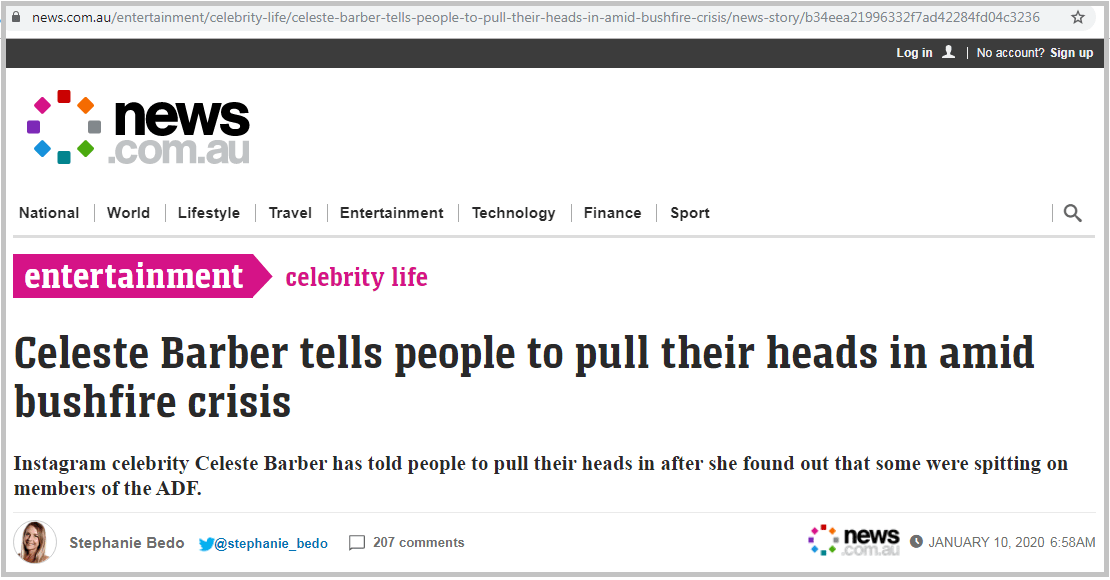
4. There actually is a real news.com.au article about Celeste Barber that was published this week. You can see from the next screenshot that the real article has a URL (web address) that matches the news agency’s name. It also has an author’s name, social media link, reader comments and a different logo design.
The moral of this story is simple:
Always hover over hyperlinks before clicking – every time.
If the destination does not match your expectations, do not click the link.
If you would like to see more fake celebrity endorsements, visit https://www.dailymail.co.uk/tvshowbiz/article-7136667/Sunrise-host-David-Koch-reveals-caught-Bitcoin-online-scam.html
PS: Fake celebrity endorsement of cryptocurrency investment has been around for quite a while. If you are interested in investing, please do a LOT of research, approaching the topic from various angles, and from a variety of sources.
Stay scam savvy,
Kerri

 That Scam Show
One thought on “Fake Celebrity Endorsement: Fake Website”